Bridal
Dressing a bride in imitation jewellery, piece by piece
What each ceremony needs, which pieces to buy and which to borrow, how to match finishes across a set, and why imitation is the sensible choice for most of it.
28 September 2026 · 7 minute read
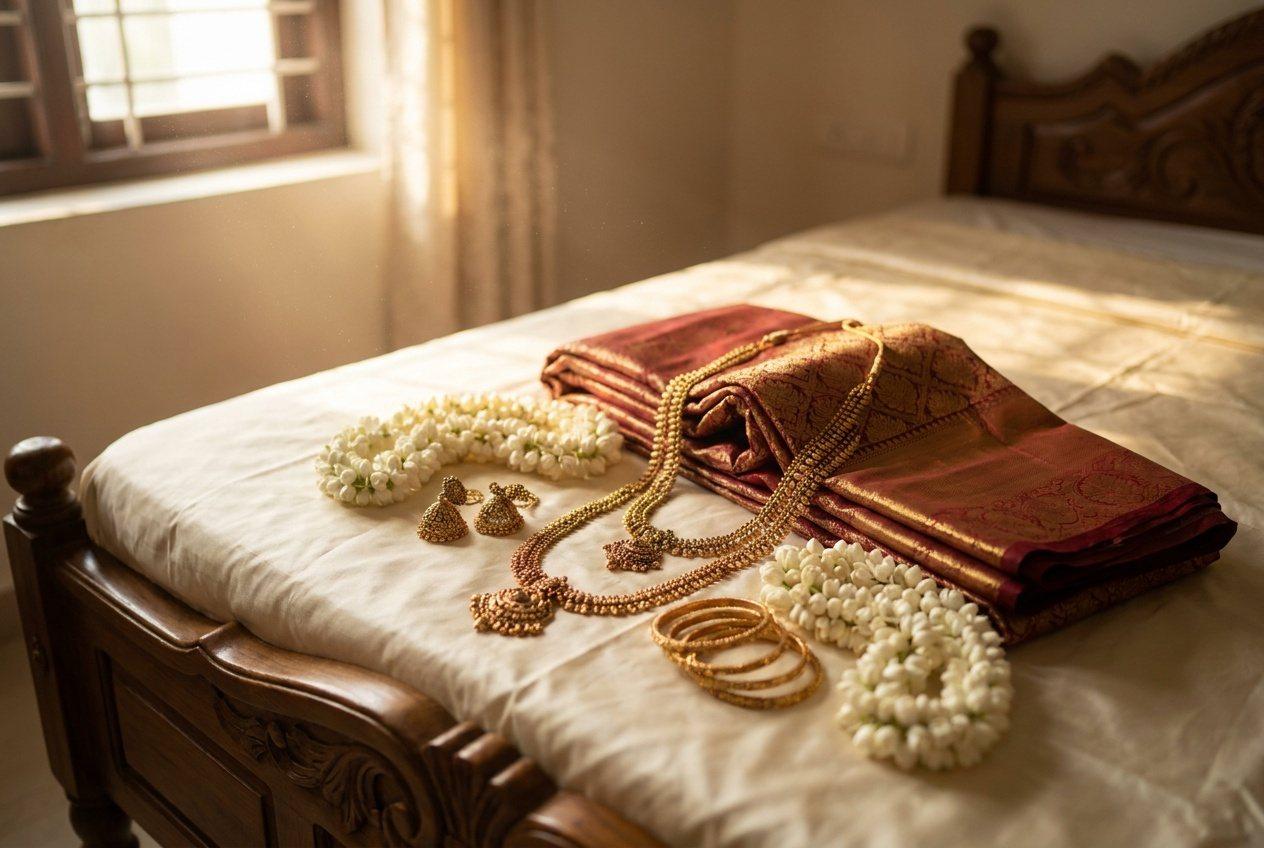
A South Indian bride wears more jewellery for four hours than most women wear in a year, and most of it is never worn again. That is the case for imitation: the thali and perhaps one haram in gold, and everything else in finishes that look right in the photographs, cost a tenth as much, and can be lent to a cousin without anyone losing sleep. This is how we suggest assembling it.
Start with the long haram
The long haram (a kasu mala or a manga malai) sets the register of the whole set: temple, antique or bright gold. Choose it first and match everything else to its finish; an antique haram beside a bright-gold choker looks like two different weddings. Harams are also the pieces that photograph, so this is where to spend.
Then the choker and the earrings
A kemp choker or a guttapusalu sits above the haram and is seen in every close-up. Jhumkas should be chosen with the hairstyle in mind: a heavy jhumka needs a maatal chain to the hair to carry its weight through a four-hour ceremony, and imitation jhumkas, being brass, are heavier than they look.
The pieces for the hair and the waist
The nethi chutti on the parting, the jadai billai down the plait, and the oddiyanam at the waist are what make a bridal look complete rather than merely rich. They are worn once; buy them in imitation without a second thought, and order the jadai early, since it is often made to order.
Matching the set
- One finish across the set: antique with antique, matte with matte. Mixing reads as borrowed.
- One stone colour story: red kemp with green accents is the classic; all-red is bolder; AD white suits the reception, not the muhurtham.
- Buy the haram, choker and jhumkas as a matched set where you can, and pick the hair and waist pieces to the same finish.
- Keep the receipt photographs: the pieces will be lent, and you will want to remember what came back.
“The gold is for the locker. The look is for the hall.”
Timelines that work
In-stock pieces reach you in a week; pre-book pieces take eight to ten working days to make before that. Order the set six weeks out, try everything on with the blouse once, and send back any size that is wrong while there is time for the exchange.
Still have a question?
Write to us, call the store, or ask on WhatsApp. A person answers, during store hours, and often outside them.